

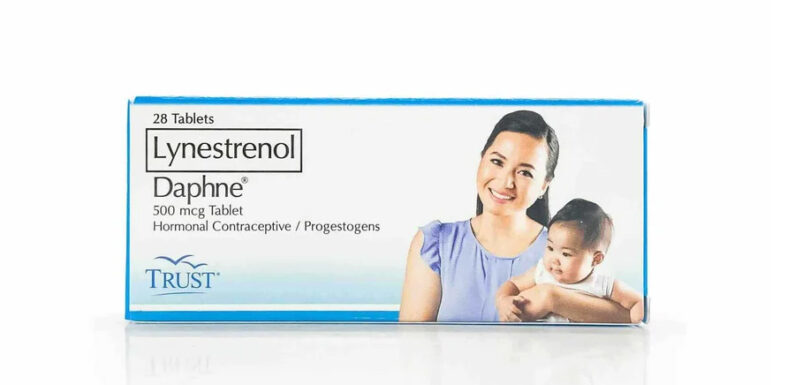
Choosing a birth control method involves understanding more than how pregnancy prevention happens. Hormonal ingredients, medical history, breastfeeding considerations, and possible side effects can all influence which contraceptive options may be appropriate.
In the Philippines, women exploring estrogen-free contraception may encounter Daphne Pills, a progestin-only oral contraceptive that differs from conventional combined birth control pills.
Daphne (lynestrenol) contains a synthetic progestin without estrogen. This distinction is important because certain medical conditions and reproductive health circumstances can make estrogen-containing contraceptives unsuitable.
Although estrogen-free contraceptives offer an alternative to combined hormonal formulations, they are not automatically appropriate for everyone.
Understanding their characteristics can help patients have more informed conversations with licensed healthcare professionals.
Only for the treatment of conditions diagnosed by a physician.
What Are Daphne Pills?
Daphne (lynestrenol) is a prescription progestin-only oral contraceptive available in the Philippines.
Its active ingredient, lynestrenol, is a synthetic progestin that has hormonal activity similar to progesterone, a hormone naturally produced in the body.
Unlike combined hormonal contraceptives, which contain both estrogen and progestin, this formulation contains only a progestin.
Progestin-only contraceptives are commonly referred to as mini-pills.
Their contraceptive activity primarily involves changes in cervical mucus, which can make it more difficult for sperm to reach an egg. Depending on the formulation, progestin-only pills may also influence ovulation.
The absence of estrogen is a key characteristic, but individual medical eligibility remains an important consideration.
What Does Estrogen-Free Contraception Mean?
Estrogen-free contraception refers to hormonal birth control methods that do not contain an estrogen ingredient.
Estrogen is naturally involved in reproductive processes, including the menstrual cycle. Synthetic forms are also used in many combined hormonal contraceptives.
However, some individuals have medical conditions or risk factors that affect their eligibility for estrogen-containing medicines.
Progestin-only contraception provides a different hormonal formulation for pregnancy prevention.
This does not mean that estrogen is inherently unsafe or that everyone should avoid combined contraceptives.
Both categories have established roles in reproductive healthcare, and each has specific advantages, limitations, and medical considerations.
The appropriate choice depends on individual circumstances rather than the absence or presence of a particular hormone alone.
How Do Progestin-Only Pills Differ From Combined Birth Control Pills?
The primary difference is the hormonal formulation.
Combined oral contraceptives contain estrogen and progestin, while progestin-only pills contain no estrogen.
These ingredients influence contraceptive mechanisms, medical eligibility, and possible menstrual changes.
| Feature | Progestin-only pills | Combined contraceptive pills |
| Hormonal ingredients | Progestin only | Estrogen and progestin |
| Estrogen content | None | Contains estrogen |
| Main contraceptive mechanism | Cervical mucus changes; ovulation suppression varies | Primarily suppresses ovulation |
| Best feeding considerations | Often medically appropriate | Additional estrogen-related considerations |
| Menstrual bleeding | Irregular bleeding or absent bleeding may occur | Withdrawal bleeding may be more predictable |
| Blood-clot consideration | Avoids estrogen-associated clotting risks | Estrogen-related clotting risks require assessment |
| STI protection | None | None |
Neither category should be considered universally preferable.
A licensed physician can explain which contraceptive methods are suitable based on the patient’s health history and reproductive needs.
Why May Estrogen-Free Contraception Be Considered During Breastfeeding?
Breastfeeding is an important consideration when evaluating hormonal contraception.
Estrogen-containing contraceptives may affect milk production in some individuals, and their medical eligibility differs depending on postpartum health factors.
Because progestin-only pills do not contain estrogen, they are commonly considered among the contraceptive options available to breastfeeding mothers.
The World Health Organization recognizes progestin-only contraception as an option during breastfeeding, subject to medical eligibility considerations.
However, breastfeeding alone does not establish that a specific product is appropriate.
Healthcare professionals may also consider:
- The mother’s overall health
- Existing medical conditions
- Other medications
- Breastfeeding circumstances
- Individual contraceptive preferences
- Potential contraindications
A qualified healthcare professional can help assess these factors and explain suitable options.
What Are the Possible Side Effects of Daphne Pills?
Like other hormonal contraceptives, Daphne (lynestrenol) may cause side effects.
Individual experiences can vary, and not everyone develops noticeable symptoms.
Potential side effects include:
- Irregular menstrual bleeding
- Spotting between expected bleeding episodes
- Changes in menstrual flow
- Headaches
- Breast tenderness
- Nausea
- Changes in mood
- Skin-related changes
Menstrual irregularities are an important consideration with progestin-only contraception.
Some individuals experience lighter bleeding, while others notice unpredictable spotting or an absence of menstrual bleeding.
These changes do not necessarily indicate a serious medical problem.
However, unusually heavy bleeding, persistent discomfort, or other concerning symptoms should be evaluated by a healthcare professional.
Can Estrogen-Free Pills Affect Menstrual Bleeding?
Yes. Progestin-only contraceptives can influence the menstrual cycle and the pattern of uterine bleeding.
The body’s response to synthetic progestins may differ from its response to combined hormonal formulations.
Possible bleeding changes include irregular spotting, reduced menstrual flow, or absent bleeding.
These variations can be an important consideration for individuals who prefer predictable menstrual patterns.
However, changes in bleeding alone cannot confirm or exclude pregnancy.
If pregnancy is suspected, appropriate medical assessment is necessary.
A healthcare professional can also evaluate whether unexpected bleeding may be associated with another underlying condition.
Are Daphne Pills Suitable for Everyone?
No. The absence of estrogen does not eliminate every medical risk associated with hormonal contraception.
Although progestin-only contraceptives may be suitable for certain individuals who cannot use estrogen, some health conditions still require caution or make hormonal contraception inappropriate.
Current or Previous Breast Cancer
Hormone-sensitive cancers are important considerations when evaluating progestin-containing contraception.
Current breast cancer is a contraindication to progestin-only contraceptives. A previous history also requires specialist assessment because hormonal exposure may be medically inappropriate.
Certain Liver Conditions
Serious liver disease and certain liver tumors may affect eligibility for hormonal medicines.
A physician should assess relevant medical history before considering a hormonal contraceptive.
Unexplained Vaginal Bleeding
Unusual bleeding may require medical evaluation to identify its underlying cause.
Patients should not assume that every bleeding change is related to contraception.
Potential Medication Interactions
Some medicines can influence the effectiveness of hormonal contraception.
Patients should disclose prescription medicines, supplements, and relevant medical conditions during their healthcare consultation.
What About Blood Clot Risks?
One distinction between progestin-only and combined hormonal contraceptives involves estrogen-related blood-clot risks.
Combined contraceptives containing estrogen are associated with an increased risk of venous thromboembolism in certain individuals.
Progestin-only pills generally do not carry the same estrogen-related clotting risk profile.
However, this does not mean every progestin-only medicine is risk-free.
Individuals with certain cardiovascular conditions, previous blood clots, or other significant medical concerns should receive individualized guidance.
Contraceptive eligibility should always be evaluated according to the specific formulation and the patient’s medical history.
How Important Is Consistency With Oral Contraception?
Consistency is an important factor in maintaining contraceptive reliability.
Different oral contraceptive formulations have different instructions and considerations when a pill is missed.
Progestin-only formulations may be particularly sensitive to inconsistent use, depending on the active ingredient.
Patients should understand the instructions provided with their prescribed medicine and discuss any difficulties with a qualified healthcare professional.
If remembering oral medication is challenging, other contraceptive methods may be worth discussing during a medical consultation.
The appropriate method depends on medical eligibility, personal preferences, and individual circumstances.
Are Daphne Pills Available in the Philippines?
Yes. Daphne (lynestrenol) is listed in the Philippine Food and Drug Administration’s drug product verification records.
The medicine is classified as a prescription pharmaceutical product.
However, regulatory registration does not guarantee that every pharmacy or healthcare provider currently has the product in stock.
When researching hormonal contraceptives online, consumers should consider whether:
- The pharmaceutical product is registered with the Philippine FDA
- The pharmacy or healthcare provider is appropriately authorized
- The medicine’s generic name is clearly identified
- Official product information is available
- Appropriate professional medical assessment is provided
Consumers should be cautious about unverified online sellers and information that does not identify the pharmaceutical product accurately.
What Should You Consider When Researching Contraception in the Philippines?
Choosing a contraceptive method involves more than comparing available brands.
Important considerations include personal health history, reproductive health circumstances, potential side effects, and access to licensed healthcare professionals.
For individuals interested in estrogen-free contraception, a physician may review whether estrogen-related medical concerns are relevant.
Other factors include breastfeeding, underlying health conditions, medication interactions, and personal preferences.
Access to accurate medicine information is also important.
The Philippine FDA Verification Portal provides a way to check registered pharmaceutical products and authorized establishments.
Reliable sources can help patients distinguish evidence-based healthcare information from unsupported promotional claims.
Frequently Asked Questions About Daphne Pills
Do Daphne Pills contain estrogen?
No. Daphne (lynestrenol) is a progestin-only oral contraceptive that does not contain estrogen.
This is the main characteristic distinguishing it from combined hormonal contraceptives.
Are progestin-only pills the same as combined birth control pills?
No. Progestin-only pills contain one type of contraceptive hormone, while combined pills contain estrogen and progestin.
Their hormonal mechanisms, side effect profiles, and medical eligibility considerations differ.
Can breastfeeding mothers consider estrogen-free contraception?
Yes. Progestin-only contraception is commonly considered among the options available during breastfeeding.
However, individual medical eligibility should be assessed by a qualified healthcare professional.
Can Daphne affect menstrual bleeding?
Yes. Progestin-only contraception may be associated with irregular spotting, lighter bleeding, or absent menstrual bleeding.
Persistent or concerning bleeding changes require medical evaluation.
Does estrogen-free contraception protect against sexually transmitted infections?
No. Progestin-only contraceptives do not protect against HIV or other sexually transmitted infections.
Condoms are an important option for reducing the risk of STI transmission.
Does estrogen-free mean there are no hormonal risks?
No. Estrogen-free medicines still contain hormones and may have contraindications, side effects, and potential interactions.
A medical assessment remains necessary.
Is Daphne a prescription medicine in the Philippines?
Yes. Daphne (lynestrenol) is classified as a prescription medicine in the Philippine FDA verification records.
Consumers should obtain accurate information from licensed healthcare professionals and authorized pharmaceutical sources.
Making an Informed Decision About Estrogen-Free Contraception
Estrogen-free contraceptive pills offer an alternative hormonal formulation for individuals exploring pregnancy prevention.
Understanding their ingredients, medical eligibility, possible side effects, and breastfeeding considerations is an important part of reproductive health education.
For people researching Daphne Pills, the key distinction is the absence of estrogen rather than an assumption that every progestin-only formulation is suitable for everyone.
Now Express PH provides additional information about Daphne (lynestrenol) for readers exploring contraceptive options available in the Philippines.
A licensed healthcare professional can help evaluate your medical history, explain relevant safety considerations, and discuss the contraceptive methods appropriate for your individual healthcare needs.
